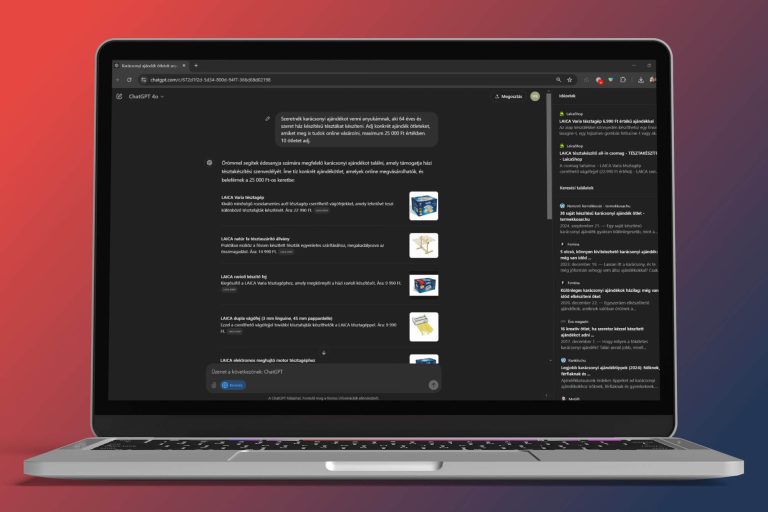
Artificial intelligence (AI) has become an integral part of technological advancements, helping us tackle everyday tasks. However, communicating with AI systems can be challenging for those without deep technical knowledge. Let’s explore how to effectively communicate with AI, particularly focusing on the OpenAI GPT-4 model.
What is a “Prompt”?
A “prompt” is a question or instruction given to the AI to receive a response or information. GPT-4 is a text-generating AI model capable of providing detailed and complex answers to user queries or instructions. For example, you can ask it how to write an advertising copy or a newsletter, and the AI can offer advice on different sections, the tone to use, and phrases to avoid, or even write the entire text for you. If you provide clear instructions, or prompt well, you will receive very precise and useful texts that may require minimal editing or can be used as-is.
Elements of an Effective Prompt
- Instructions: Directives given to the AI specifying what you want.
- Question: The specific question you seek an answer to.
- Input Data: Information that the AI uses to formulate its response.
- Examples: Specific examples that help the AI understand what you expect.
Examples of Effective Prompts
- Advertising Copy: “Create a short ad copy for a new eco-friendly, recyclable coffee cup targeting young urban office workers. Emphasize environmental protection and stylish design.”
- Social Media: “Generate an Instagram post for a fitness brand showcasing their new online workout plan designed for home exercise. The post should be motivating and inspiring, emphasizing the community aspect. Write in a casual style and make it appealing to potential customers.”
- Newsletter Subject Line: “Create a short, attention-grabbing email subject line for a marketing campaign introducing a new software product that automates billing processes for small businesses.”
Prompt Engineering
“Prompt engineering” is the process of optimizing AI prompts to get the most accurate and useful responses. Writing prompts is partly an art and partly a science. Many believe that simply writing a prompt will immediately yield the correct answer from ChatGPT. However, when they receive unusable responses, they blame the AI. In reality, the user didn’t provide precise instructions.
Tips for Prompt Writing
1. Define the AI’s Role In your instructions to the AI, define the role it should assume. The “role” refers to the perspective from which the AI should examine and solve the task. For example, if the prompt is “Write a blog post about hamburgers,” a chef might focus on preparation, while a health expert might discuss the health risks of consuming hamburgers.
2. Specify Database and Tasks Clearly It’s crucial to clarify the database or information source the AI should use and precisely what you expect as a result. Without a clear description of the data and tasks, the results may be inaccurate.
3. Define Output Format and Style The AI needs to know the form and style in which you expect the results. A table, blog post, or Facebook ad text all require different structural and stylistic elements. Additionally, the response style may vary—answers directed at a five-year-old or a university professor require different language and terminology.
4. Data Privacy and Copyright When working with AI, provide only non-personal and non-copyrighted data. During interactions with AI, we partially relinquish data copyrights, so ensure that the shared information doesn’t endanger personal or business secrets and complies with legal regulations.
Recognizing and Handling AI Hallucinations
There are situations where the AI generates information that is inaccurate, irrelevant, or simply non-existent. This phenomenon is known as “hallucination.”
Why does this happen?
- Overfitting: The AI, when trained too deeply on a specific dataset, fits patterns that are not necessarily relevant or useful for new, unknown data.
- Lack of General Knowledge: AI lacks real-world experience or general knowledge, so answers in new or unknown topics are often based solely on training data, leading to unusual or inaccurate responses.
- Lack of Context: AI cannot “interpret” reality like humans, sometimes inventing irrelevant or non-existent details.
How to Recognize and Manage AI Hallucinations
- Always verify AI-generated information with reliable sources.
- Assess whether the AI’s response is logical and consistent with known facts.
- If in doubt, ask additional questions to better understand and verify the information.
- Be conscious, critical, and cautious when working with AI technology. Remember that AI is a tool that aids digital and creative projects under our guidance and control.
Effective communication with AI, especially using the GPT-4 model, is a skill that can offer a competitive edge in work or business today. However, in a few years, it may become a basic skill expected in the workplace, akin to writing emails or using a word processing program. It’s worth learning early to stay up-to-date in this rapidly evolving environment.