Suno AI for Video Ads: How to Create Music That Fits the Cut
A product ad has 15 seconds to do its job. The bottle appears, the cap clicks into place, a voice explains what makes it different, and the brand has two seconds left on screen. A track can sound great on its own and still spoil that sequence. A drum fill can bury the click. A melody can draw your ear away from the one sentence you need to hear.
When I first tried Suno, I had no musical training and managed to generate a track I liked on my first attempt. For advertising, I’d judge the result by a more demanding test. Play it against the footage once. Can you hear the product, follow the voice and feel the film come to a deliberate end?
Start with the moments the audience needs to hear
Imagine a 15-second launch film for a refillable perfume bottle. It opens on the brushed metal cap. Halfway through, a hand twists the bottle open to reveal the refill mechanism. A short voice-over explains how it works. The final shot holds on the assembled bottle and logo.
That gives the music a job in each part of the film. A light pulse can carry the opening close-ups. As the cap turns, a gap in the percussion leaves room for the actual sound of the mechanism. Under the voice, a sustained bass note might be all the scene needs. One final chord can give the logo a recognisable ending.
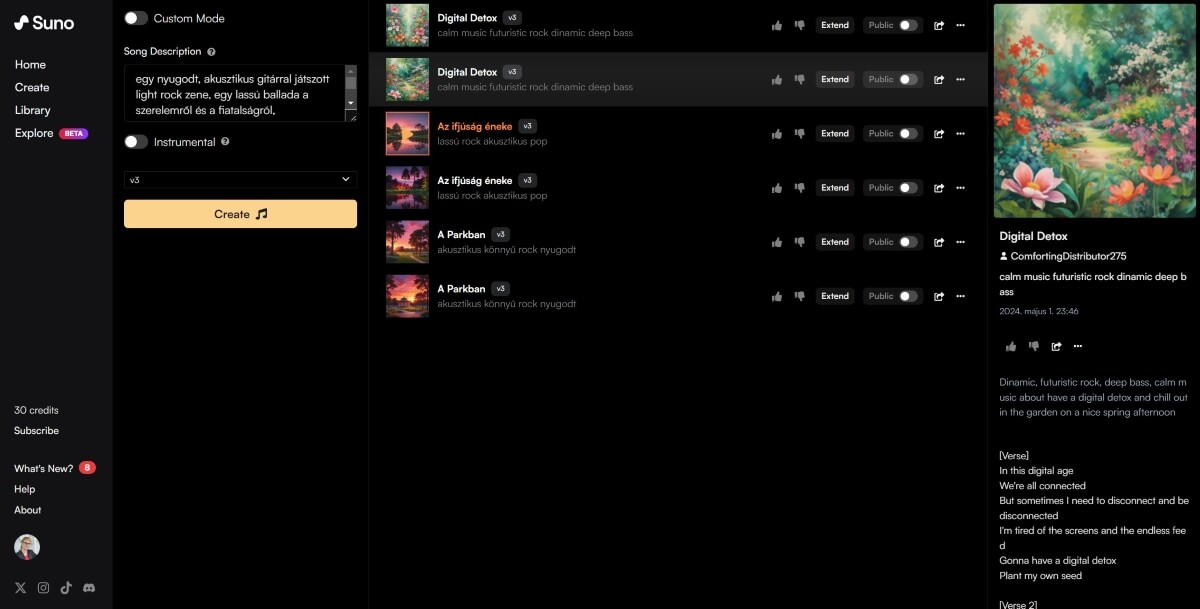
Here’s the prompt I’d use to explore that direction in Suno:
Instrumental score for a 15-second refillable perfume ad. Intimate, tactile, quietly confident. Aim for eight bars in 4/4 at 128 BPM. Open with a muted electronic pulse and two soft plucked notes. Thin out the percussion halfway through for the click of a metal cap. Keep the melody sparse under a short voice-over. Bring the two-note motif back for the logo and finish on a clean, short chord. No vocals.
There’s a practical reason for that tempo. Eight bars of 4/4 at 128 BPM add up to exactly 15 seconds. That gives the editor a musical structure to aim for. Treat the timing in the prompt as a request and check the generated audio against the actual cut.
What Suno can change once you have a promising track
As of November 2026, Suno’s v6 family includes v6-mini on all plans and v6 and v6-wild on Pro and Premier. The distinction that matters for video production is how much of a good take you can keep. With v6, you can describe a change to a particular section. If the opening pulse works but the arrangement gets busy under the narration, ask for a sparser middle section and listen again with the voice-over in place.
Sometimes the smallest fix is in the edit. If one drum hit masks the sound of the cap, separating the percussion into its own audio track gives you a way to lower it for that moment. Suno calls these separate tracks stems. Its Studio workspace, included with Premier, also offers clip stretching and adjustable fades. A short fade can be enough to clear the last word of the voice-over while keeping the music moving into the product shot.
Before approving the mix, I’d play the finished ad through a phone speaker at ordinary listening volume. If the refill explanation gets lost there, that’s the version to fix. I’d also check the six-second cut separately. It may only need the opening two notes, the click and the closing chord.
Can you use Suno music in a client’s video ad?
For an original track intended for a commercial campaign, create it under a qualifying paid plan and download it through Suno’s approved download channel while subscribed, within the plan’s allowance. Suno limits free-plan output to personal, non-commercial use. Its terms also place separate restrictions on remixes made through its user-remixing features, even for paying subscribers.
If a client likes a demo you generated on the free plan, check its status before promising that particular recording for the campaign. Upgrading later does not normally grant retroactive commercial rights. Suno also distinguishes permission to use a track commercially from copyright protection. That distinction matters if the brief calls for an exclusive brand theme.
For handover, I’d keep the approved audio file, its Suno track details, the download date and the subscription record together with the final video. When the client asks for a shorter edit months later, the team can find the right recording and the terms under which it was delivered.
If you’re commissioning a product video, one of the most useful things you can put in the brief is the moment your audience should remember. For the refillable bottle, it might be the sound of the cap settling back into place. That single detail can guide the camera, the cut and the music.